

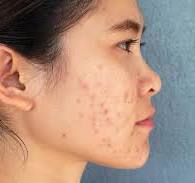
Learn what dermatology research says about Retin-A (tretinoin) for acne scars, dark spots, hyperpigmentation, and uneven skin texture.
Acne often leaves more than just a temporary breakout. Even after pimples disappear, many people are left with dark spots, uneven skin tone, and changes in skin texture. This can be particularly noticeable in people with darker skin tones, where post-inflammatory hyperpigmentation (PIH) may persist for months.
Retin-A, the brand name commonly associated with topical tretinoin, is one of the most established prescription retinoids used for acne. But can it actually help with the marks and scars acne leaves behind?
Research suggests that tretinoin can be useful for acne, post-inflammatory hyperpigmentation, and some aspects of uneven skin texture, although it is important to distinguish between dark spots and true acne scars.
What Is Retin-A?
Retin-A contains tretinoin, a topical retinoid derived from vitamin A. Unlike cosmetic retinol, tretinoin is a prescription-strength retinoid in many countries.
It works partly by increasing skin-cell turnover and preventing pores from becoming clogged. Because acne itself can contribute to pigmentation and scarring, controlling new breakouts is an important part of preventing additional marks.
The American Academy of Dermatology notes that topical retinoids can treat acne and may also help lighten dark spots that remain after acne clears.
Retin-A and Acne Scars: An Important Difference
One of the biggest misconceptions about Retin-A is that all acne scars are the same.
They aren’t.
Dark marks after acne
Flat brown, red, or darker marks left after a pimple are often related to post-inflammatory hyperpigmentation or post-inflammatory erythema. These aren’t technically the same as permanent structural scars.
Tretinoin may help these discolorations gradually become less noticeable.
Indented acne scars
Ice-pick, boxcar, and rolling scars involve changes in the skin’s structure. Retin-A isn’t generally considered a complete treatment for established deep or moderate-to-severe depressed scars.
A dermatologist may instead consider procedures such as microneedling, chemical reconstruction techniques, subcision, laser treatments, or other scar-directed approaches depending on the scar type.
The AAD also recommends professional assessment for people with moderate or severe acne scarring.
In simple terms: Retin-A can be more useful for acne and the pigmentation left behind than for completely removing deep, established acne scars.
What Does Research Say About Retin-A and Dark Spots?
There is clinical evidence supporting tretinoin’s effect on post-inflammatory hyperpigmentation.
One well-known randomized, double-blind study evaluated 0.1% tretinoin in people with post-inflammatory hyperpigmentation. After 40 weeks, the tretinoin-treated lesions were significantly lighter than those treated with the vehicle. Improvement was detectable as early as four weeks.
Importantly, many of the pigmentation lesions in that study were associated with acne.
This provides useful evidence that tretinoin isn’t simply an acne medication—it can also influence pigmentation that develops following inflammation.
However, this does not mean that every dark spot will disappear quickly or completely.
Why Can Retin-A Help Post-Acne Pigmentation?
Tretinoin affects several processes within the skin.
It can:
- Increase epidermal cell turnover
- Help prevent clogged pores
- Improve acne over time
- Promote more even shedding of pigmented skin cells
- Influence the distribution of melanin within the epidermis
- Improve overall skin texture
Reviews of topical retinoids in people with skin of color have found evidence that retinoids can reduce acne and associated hyperpigmentation. Researchers also emphasize that pigmentation may take longer to improve than the acne itself.
This is one reason patience is important when using tretinoin.
What About People With Darker Skin?
This is particularly relevant because acne-related hyperpigmentation can be more persistent in people with skin of color.
A clinical review focusing on topical retinoids and skin of color concluded that retinoids have a role in treating both acne and post-inflammatory hyperpigmentation. It also highlighted the importance of managing irritation because excessive inflammation can potentially worsen pigmentation.
That point is important.
Using more tretinoin does not necessarily mean faster results.
If the skin becomes severely irritated, red, peeling, or inflamed, the resulting inflammation may make pigmentation more noticeable.
How Long Does Retin-A Take to Improve Dark Spots?
There isn’t one universal timeline.
Some research has detected pigmentation improvement within several weeks, while more noticeable results may require several months of consistent treatment. In the 40-week clinical study discussed above, improvement was detected at four weeks and continued throughout the study period.
For everyday skincare, it is more realistic to think in terms of months rather than days.
Your results can depend on:
- Tretinoin concentration
- Frequency of application
- Acne severity
- Skin sensitivity
- Depth and type of pigmentation
- Sun exposure
- Skin tone
- Whether new acne continues to develop
- Consistency of treatment
Retin-A Can Help Prevent New Acne Marks Too
One of the advantages of treating acne with tretinoin is that it addresses the problem at its source.
If fewer inflammatory pimples develop, there may be fewer opportunities for new post-acne dark marks to form.
The AAD identifies topical retinoids as an acne treatment and also notes their usefulness as maintenance therapy after acne is under control.
This makes acne control an important part of any strategy for improving post-acne pigmentation.
Retin-A and Sunscreen: A Critical Combination
If you’re trying to fade dark spots, daily sun protection is extremely important.
Ultraviolet exposure can contribute to pigmentation and make existing discoloration more difficult to manage. A broad-spectrum sunscreen can help reduce additional UV-related pigmentation while you’re treating acne marks.
A clinical study investigating acne and acne-induced PIH in patients with darker skin used daily SPF 30 sunscreen alongside its treatment regimen.
A practical routine may therefore include:
Morning
- Gentle cleanser
- Moisturizer if needed
- Broad-spectrum sunscreen
Night
- Gentle cleanser
- Allow the skin to dry
- Apply the prescribed tretinoin as directed
- Moisturizer
Your dermatologist may recommend a different routine depending on your skin and other treatments.
What About Retin-A Purging?
Some people experience increased breakouts, dryness, peeling, or irritation after starting a topical retinoid.
This can make it tempting to stop treatment immediately or apply more product to try to accelerate the process.
Neither approach is ideal.
Start and adjust tretinoin according to your clinician’s instructions. If irritation becomes significant, speak with your dermatologist rather than trying to push through severe inflammation.
This matters because irritation itself can worsen post-inflammatory pigmentation in susceptible skin. Recent reviews specifically highlight irritant contact dermatitis as a potential contributor to treatment-related PIH.
Does More Tretinoin Mean Better Results?
No.
Tretinoin is potent, and using a larger amount doesn’t necessarily produce faster improvement.
A common practical approach is to use a small amount over the affected facial area according to the instructions provided by your healthcare professional. Frequency may also be adjusted depending on how well your skin tolerates treatment.
If your skin becomes persistently irritated, your dermatologist may recommend reducing frequency, changing the formulation, or adding moisturization.
Can Retin-A Remove Dark Spots Completely?
It’s better to think of tretinoin as a treatment that can gradually improve pigmentation, rather than a product that guarantees complete removal.
A person’s response can vary considerably.
Some dark spots may fade substantially, while others can remain partially visible. Pigmentation may also return or new spots may develop if acne continues or the skin experiences repeated inflammation and sun exposure.
Research supports the potential benefit of tretinoin for post-inflammatory hyperpigmentation, but researchers have also noted limitations in the evidence and a need for larger, standardized clinical trials.
Retin-A vs. Cosmetic Retinol
Retin-A and retinol are related but aren’t identical.
Tretinoin (Retin-A) is a prescription retinoid with substantial clinical evidence for acne.
Retinol is a cosmetic retinoid precursor that must undergo conversion within the skin.
The American Academy of Dermatology explains that retinoids include several vitamin-A-based ingredients, while retinol is commonly used in cosmetic skincare for concerns such as uneven tone and texture.
The best option depends on the individual’s skin, goals, tolerance, and medical history.
Common Mistakes When Using Retin-A for Dark Spots
1. Expecting results in one week
Pigmentation usually takes time to improve.
2. Applying too much
More product isn’t automatically more effective and can increase irritation.
3. Ignoring sunscreen
UV exposure can work against your pigmentation goals.
4. Using too many active ingredients
Combining several strong exfoliating or irritating products can compromise the skin barrier.
5. Scrubbing peeling skin
Aggressive exfoliation can increase irritation and potentially worsen discoloration.
6. Treating every mark as an acne scar
A flat brown spot and a deep indented scar require different approaches.
7. Stopping immediately because of mild dryness
Some initial dryness can occur, but significant or persistent irritation should be discussed with a healthcare professional.
When Should You See a Dermatologist?
Consider professional evaluation if:
- You have deep or extensive acne scars
- Your acne is severe or persistent
- Dark spots are worsening
- Your skin becomes very irritated
- You aren’t seeing improvement despite consistent treatment
- You aren’t sure whether you’re dealing with PIH or true scarring
- You’re considering combining tretinoin with other prescription treatments or procedures
A dermatologist can determine whether tretinoin alone is appropriate or whether another treatment should be added.
The Bottom Line
So, does Retin-A help acne scars and dark spots?
The answer depends on what you mean by “scars.”
For acne-related dark spots and post-inflammatory hyperpigmentation, dermatology research supports a role for topical tretinoin. Clinical studies have demonstrated gradual improvement in hyperpigmentation, including pigmentation associated with acne.
For deep, indented acne scars, however, Retin-A should not be viewed as a complete scar-removal treatment. These scars often require a different dermatological approach.
The most realistic strategy is to control active acne, use tretinoin consistently when appropriate, protect the skin from UV exposure, minimize irritation, and give pigmentation enough time to improve.
Important: Retin-A/tretinoin is a prescription medication in many places. This article is for general educational purposes and does not replace advice from a qualified dermatologist or healthcare professional. Tretinoin may not be appropriate for everyone, and pregnancy-related precautions should be discussed with a healthcare professional before use.
